Press conference, Brisbane Commonwealth Parliamentary Offices

Source: Australian Parliamentary Secretary to the Minister for Industry

Jim Chalmers:

Today’s National Accounts show an uptick in annual economic growth and a stronger and broader private sector recovery. Australia’s economy grew 0.4 per cent in the September quarter to be 2.1 per cent higher through the year. That means in annual terms this is the fastest growth in 2 years. The really encouraging part of these numbers is to see that the growth in the private sector is gathering pace and that’s powered by the strongest growth in private investment in almost 5 years.

The biggest story in these National Accounts is the very strong growth in business investment and investment in housing as well. This is a positive and promising result. It speaks directly to the progress that we have made together in our economy. It’s especially heartening to see the way that the private sector is gathering pace when you see the business investment numbers and also when you see the progress we’ve made in this quarter and through the year in housing as well.

So in a little bit more detail when it comes to that private investment number this is the fastest quarterly growth in private investment in almost a decade. It’s making a very important contribution to growth in the quarter and through the year. New business investment grew 3.4 per cent in the quarter to be 3.8 per cent higher through the year as well. So, if you think about it in the course of the last few years since we came to office, new business investment has grown by an annualised average of 3.9 per cent. Remember it was falling 1.3 per cent on average under our predecessors. And so the new business investment story is the most encouraging, the most positive part of the National Accounts which have been released today.

But just as encouraging is the progress that we’ve made on housing, which is obvious and evident in these numbers. Investment in new housing supply is another really positive part of the story in these National Accounts. We’ve now seen dwelling investment grow for 7 consecutive quarters which is the longest consecutive streak in a decade. Dwelling investment grew 1.8 per cent in the quarter to be 6.5 per cent stronger through the year. When we came to office dwelling investment was going backwards by 3.6 per cent in annual terms. It’s now grown 6.5 per cent through the year to September. So very encouraging outcomes in this data when it comes to housing and when it comes to private investment as well.

Similarly, and we’re much more cautious here, given productivity is a long standing challenge that will take us some time to turn around in a sustained way, but very encouraging to see productivity lift for a fourth consecutive quarter as well. It’s now growing at 0.8 per cent in annual terms which is roughly consistent with the 20‑year average and, again, when it comes to the private sector story productivity in the private sector in the market sector is up 1.1 per cent through the year as well.

So, we are very cautious about the productivity figures this is a challenge that’s been a big feature of our economy for a couple of decades now, but very encouraging to see 4 consecutive quarters of productivity growth and especially encouraging to see market sector productivity at 1.1 per cent through the year as well.

Now when it comes to incomes we’ve also seen real household gross disposable income per capita grow again. In the quarter it’s now 2.1 per cent higher through the year. The compensation of employees’ number in these National Accounts which goes to wages grew by 1.7 per cent in the quarter to be 7.1 per cent higher through the year. One of the reasons why that’s important is it now means that the wages share of income has risen to 54.2 per cent when it was below 50 per cent before we came to office. The wages share of income is well over 50 per cent now, it was less than 50 per cent when we came to office.

You can also see in these numbers that the 3 interest rate cuts this year are flowing through to household budgets. We see the mortgage interest costs falling in these National Accounts. They’ve actually fallen by around $2.1 billion since the end of last year and that’s because of those 3 interest rate cuts that we’ve seen through the course of calendar 2025.

So the story of 2025 is really about this private sector recovery. And if you compare private demand with public demand this becomes even clearer. New private final demand grew 1.2 per cent in the quarter to be 3.1 per cent higher through the year. What this means is that private demand, the private economy, has now contributed more to growth than public demand for 4 consecutive quarters.

In the quarter that we’ve seen the data for today, the contribution of private demand is 3 times bigger than the contribution of public demand. And if you look over the last year, annual private demand growth has lifted more than fivefold at the same time as annual public demand growth is less than a third of what it was a year ago. All of the economic growth over the past year, the main story there has been private demand and private growth and the recovery in our private economy.

So that’s why these numbers are especially encouraging. They are positive and promising numbers in these National Accounts today and the biggest reason for that is recovering new business investment, the growth we’re seeing in housing investment, all feeding through to the private economy taking its rightful place as overwhelmingly the main driver of growth in our economy in ways that we are encouraged by and ways that we welcome. Happy to take a few questions.

Journalist:

The growth in the government spending was stronger in the quarter than household spending. Doesn’t this show that the hand over from public to private is not really happening?

Chalmers:

Absolutely not. I couldn’t disagree with you more when it comes to the contribution of the private economy versus the public economy. Overwhelmingly, the story of 2025 and the story of these National Accounts has been very encouraging and very strong recovery of the private economy. You see it in the new business investment, you see it in the dwelling investment, you see it in our consumption, you see it in the ways that incomes are feeding that consumption but especially when you look at private final demand versus public final demand. And as I said a moment ago, private demand growth has lifted more than 5 times over the last year.

And it’s contributed to all of the economic growth, at the same time as public demand growth is less than a third of what it was and so overwhelmingly. However you cut the numbers, the story here is the recovery in the private economy. This is the recovery in the private economy that we have planned for and prepared for and hoped for, and it’s pleasing to see it coming to fruition in the way that these numbers lay bare.

Journalist:

I recognise that private investment has grown. But isn’t the problem that government spending is still growing faster than household spending?

Chalmers:

No, I don’t believe that is an issue in these National Accounts and the reason for that is because if you look at the public final demand, overwhelmingly I think two‑thirds from memory of it is state spending. But even leaving that aside for a moment, the contribution to growth which is being made by the private economy absolutely multiples compared to the contribution made by public investment. And in previous years we’ve seen public demand play a bigger role in the economy, there are good reasons for that when the economy is especially soft. But right throughout the course of the last 3 or 4 years we’ve wanted to make sure that the private economy takes its rightful place as the key driver of growth in our economy and that’s what we’re seeing in these National Accounts.

Journalist:

Treasurer, how much are you looking to find in savings in MYEFO?

Chalmers:

Well, we’re still putting the finishing touches on the mid‑year budget update. We will release that later this month. We’re working very hard, Katy Gallagher and I, with the Expenditure Review Committee and the Cabinet colleagues more broadly. We’ve made it clear that in every budget update that we hand down we’re looking for ways to reprioritise some spending to higher priority areas and already in the course of the last 4 Budgets and budget updates we have found around $100 billion in savings and that’s helped us make room for investments in strengthening Medicare or providing tax cuts for all 14 million Australian workers.

So, people should expect us to continue to search for ways to reprioritise spending, it’s one of the ways that we manage our budget in the most responsible way that we can. It’s one of the reasons why we’ve already delivered 2 surpluses in our first 2 years and much smaller deficit in our third year. Now the main task of this mid‑year update will be finding room for some of the upward revisions to spending. My colleague, Matt Keogh, has spoken about the extra $1.3 billion in estimates variations in the veterans’ portfolio for example.

So, as we go through the budget in our usual responsible and considered and methodical way, one of the main tasks for the mid‑year budget update is to find room for those pressures and make room for those pressures. It won’t be a mini budget later this month, the main game will be in May. But we won’t be waiting for May in order to make some decisions to make room for some of these budget pressures which are escalating rather than easing.

Journalist:

The September quarter growth was still slower than expected. Are you hoping to see that accelerate this quarter into the new year, and do you think interest rate cuts would help with that?

Chalmers:

A couple of things about that. I mean, one of the reasons why the quarterly growth figure came in a little lower than the market was expecting is because they have revised up the quarter before. And you would understand, certainly, people who follow the National Accounts closely will know that that can have an impact. It means that we’ve actually had economic growth of at least 2 per cent in annual terms for the last 2 quarters because they’ve revised up the last quarter and that flows through to the calculation for this quarter. That’s a big part of the story.

Another part of the story is inventories particularly when it comes to coal and gold, that’s making a detraction from growth here. But overwhelmingly, the story here is about the engines of private sector growth firing up and we want to see that continue. And so much of our agenda is about encouraging our economy to grow, encouraging our private sector to make great investment decisions. And looking at these National Accounts today one of the reasons I describe them as positive and promising is because we need this investment to flow, to make our economy more productive, more resilient, over time and so it’s very welcome from that point of view. Obviously want to see the economy continue to grow and we want to make sure that the private sector continues to be the main reason for that growth.

On interest rate decisions, as you know, I don’t predict or pre‑empt decisions taken independently by the Reserve Bank and its board. There’s already been 3 interest rate cuts this year, that’s one of the reasons why mortgage repayments are down $2.1 billion, that’s providing some welcome relief to people who are still doing it tough.

Journalist:

Treasurer, last week you said that you would be looking closely at today’s GDP figures before making a call on whether to continue energy rebates. Given the GDP print is softer than what economists predicted, does this make a stronger case that households need that continued support?

Chalmers:

Well, we’ve made it really clear that the electricity bill rebates are an important part of our budget but not a permanent feature of our budget. There were important reasons for us to introduce and extend on a couple of occasions the electricity bill rebates that are in the budget. We have been really upfront with people all along and said people shouldn’t expect that to be a permanent feature of the budget.

We’re still putting the finishing touches on the mid‑year budget update. These numbers that we’ve got today are an important input in to putting that document together. We’ll make all of those final decisions, but as we’ve said now I think on countless occasions people shouldn’t expect those electricity bill rebates to go on forever.

Journalist:

How confident are you –

Chalmers:

We’ll go back to [inaudible] and then back to you.

Journalist:

Treasurer, would reducing government spending help prevent a rate rise next year?

Chalmers:

Well if public spending is the key determinant of interest rate decisions, we’ve had 3 interest rate cuts this year. And 2 of those came after the Budget that Katy and I handed down in March. But overwhelmingly, the pressure on inflation and some of the issues that the Reserve Bank grapples with, you know, they haven’t been identifying public spending as part of the story.

Even today when the Governor was asked about the relationship between budgets and monetary policy decisions she was speaking I think overwhelmingly about global conditions. The Governor has made it clear on other occasions that we’re a bit different to other countries, we’ve had those 2 surpluses, we’ve got a much stronger, much smaller deficit in our third year. Debt to GDP is a fraction of a lot of other countries.

We’ve got the peaking debt down. There’s $200 billion almost less debt in our budget than when we came to office and so we’ve been managing our budget in the most responsible way that we can. We’ve seen 3 interest rate cuts already this year. I think the pressures on inflation and some of the considerations around interest rates are not primarily about the budget position but if they are we’ve seen those 3 cuts already this year.

Journalist:

How confident are you that real wages will continue to improve?

Chalmers:

Well we’ve seen 2 consecutive years now of real wages growth and real wages were falling sharply when we came to office. We’ve deliberately turned that around. It’s been a really a key feature of our economic plan to make sure that more people are working, earning more and keeping more of what they earn with the tax cuts. Obviously the real wages calculation is about inflation and it’s about the wage price index.

We’ll update our forecasts in the usual way in the mid‑year budget update, but already to have those 8 consecutive quarters of real wages growth is a key reason why incomes have recovered in our economy and why we’ve seen over the last year or so the increase in consumption. We’ve been able to make sure that we get wages moving again, interest rates have been cut 3 times this year, we’re providing cost‑of‑living relief in other ways and that’s all important ways that we help people who are still doing it tough.

Journalist:

With inflation ticking up again do you have any concerns that it might over take wages growth in the new year?

Chalmers:

Well obviously we want to see a real wages growth continue for as long as it can and we’ll update our forecasts for the CPI and the WPI in the usual way over time. But those 2 years of real wages growth shouldn’t be lightly dismissed, it’s a key reason why we’re seeing this recovery in incomes including incomes per person. When we came to office living standards were falling sharply, real wages were falling sharply, housing investment was falling sharply, business investment on average was [inaudible] and we’ve been turning that around and those are the reasons why we’re so encouraged by these numbers today.

Journalist:

Michelle Bullock has come out and told estimates that we’re facing a chronic under build of new homes and we’re likely to miss your target of 1.2 million new homes by the end of the year. What more can be done to ensure that we do those targets and do you believe that you will miss them?

Chalmers:

Well first of all, the target is not for the end of the year.

Journalist:

End of the decade.

Chalmers:

No, understood. No problem. Look, I wasn’t able to watch Governor Bullock’s testimony, as it turns out I was actually at a ceremony to open 500 new apartments at Bowen Hills near where you work in that wonderful neighbourhood around where so much of the action will be for the Olympics. Look, we’ve acknowledged as a government that we need to build more homes. That’s the whole reason why we’ve got this ambitious but achievable housing target for 2029. It’s why we’re throwing so much time and energy and resources in to building the homes that Australians desperately need, because we recognise that this is one of the defining challenges in our economy.

Now, that target is ambitious but it is achievable if everybody does their bit and the Commonwealth is doing its bit, $43 billion in investment working with the states, with local governments, working with the industry, working with investors, providing all kinds of different ways that we’re encouraging the building of more properties in our local communities. And again, I refer you to the National Accounts today because today’s National Accounts show that investment in new homes is growing strongly. It’s actually one of the key stories out of the National Accounts today. So we need to maintain that momentum. We need to build that momentum and if we do that, if we keep, if everyone does their bit we can hit that very ambitious target.

Journalist:

Who is not doing their bit?

Chalmers:

Well I’m not putting it that way, I’m just saying we all need to do our bit. The Commonwealth is doing its bit, we’re working closely with the states and local governments, the industry we’re engaged with very closely. Clare O’Neil, the minister, is doing a heap of good work in this area. We all need to keep up the effort.

We’ve got these very strong housing investment numbers in the National Accounts today, that’s a good thing, but we need to sustain them. We need to sustain this momentum. We still don’t have enough homes because of basically the missed opportunity of the decade before we came to office. So we’re playing catch up, we’re doing everything we can, and we’re working closely with all of the relevant parties to build the homes that Australians desperately need.

Journalist:

Just to circle back to the rebate question. It’s expected that inflation will remain sticky as it stands and households won’t have that $75 a quarter rebate from January. Treasurer, what do you have to say to families that are staring down the barrel of an expensive December and new year and currently don’t have certainty on whether they can factor in a potential rebate into their budgets in the new year?

Chalmers:

Well we understand that even with the very substantial progress we’ve made on inflation and real wages and per person incomes, we know that a lot of Australians are still doing it tough. And that’s why we’re rolling out very substantial cost‑of‑living relief, cheaper medicines, more bulk billing to take pressure off family budgets. There are 2 more tax cuts on the way as well.

Now we’re rolling out very substantial cost‑of‑living help in the most responsible way that we can. Which is cognisant of all of the pressures that we have on the budget. So the electricity bill rebates are an important part of the cost‑of‑living help that we have been providing but they’re not the only part of it. Tax cuts are a big part of the story, getting wages growing again, the increase in Commonwealth Rent Assistance, cheaper medicines, more bulk billing, all of this is about trying to alleviate some of the pressure that we understand people are still facing right now.

Journalist:

You say that households shouldn’t expect those rebates to continue, you have said that repeatedly. But don’t they deserve some certainty either way, whether that’s you guys ruling it out completely? Why keep that limbo going?

Chalmers:

Well, we make these decisions from budget update to budget update in the usual way. It’s not especially unusual to make those decisions close to the finalisation of our budget updates. This is a government that manages the budget in a really responsible way, in a way that would be unrecognisable to our predecessors and part of that is to make sure that we do the work, in the lead up to budgets and in the lead up to mid‑year budget updates, to only commit to what we can afford.

There’s a lot of pressures on the budget. We’re rolling out cost‑of‑living help in the most responsible way that we can and we’re being upfront with people and saying those energy bill rebates and we’ve said now for a couple of years are not a permanent feature of the budget. That we shouldn’t expect them to continue forever and we’ll make a decision on them in the coming days.

Journalist:

What would persuade you to keep the rebates?

Chalmers:

I’m obviously not going to go in to all the conversations that we have, the Expenditure Review Committee or as a Cabinet, or my colleagues –

Journalist:

Yeah, but what would persuade you to keep it, what would be some of the factors that would make you think, we should keep this?

Chalmers:

Well again, I’d answer the question in precisely the same way I started answering it a moment ago. I’ll give you the same answer. We’re providing cost‑of‑living help in a range of ways. Not just in that way. We’ll weigh up all of the various considerations in every budget and in every budget update we consider the economic conditions, we consider the fiscal pressures and we do what we responsibly can to help people.

We’ve been doing that in a range of ways, not just one way over the course of the last couple of years. We’ve got the National Accounts now, that’s really the last key input before we make a remaining handful of decisions in the lead up to the mid‑year budget update. Not long to wait now, it will be this month, and when we release that we’ll provide all of the numbers and all of our reasoning behind the numbers.

Thanks very much.
Priority status to build more public and community homes

Source: Australian Capital Territory – State Government


Priority status to build more public and community homes – Chief Minister, Treasury and Economic Development Directorate


As part of ACT Government’s ‘One Government, One Voice’ program, we are transitioning this website across to our . You can access everything you need through this website while it’s happening.


Released 03/12/2025 – Joint media release

The ACT Government has passed new laws to fast-track the delivery of more homes for the Canberrans who need them most. The Bill was opposed by the Canberra Liberals.

This new legislation has been expanded and now applies to both public and community housing, removing third party appeals and providing certainty around their construction.

This suite of reforms will support the delivery of our ambitious housing agenda to enable 30,000 new homes by 2030. This includes 5000 new public, community and affordable homes.

Public social and community homes default priority status 

Since 2019 there have been 20 appeals on public housing projects, delaying over 100 public homes in well-located areas, close to shops, services and jobs.

More than 75 per cent of these saw ACAT upholding the original approval, or specifying very minor amendments, but the process delayed projects for up to a year.

Efforts to increase the number of public homes in these areas have also been clustered in certain districts of Canberra with nearly 95 per cent of these being isolated to the inner-north and inner-south.

The new laws bring the ACT into line with other New South Wales, Victoria, Queensland and Western Australia where appeals are also not permitted for public and community housing projects.

Attribute to Minister for Planning and Sustainable Development Chris Steel:

“These housing reforms will support the rapid delivery of social housing for those most in need.

“Unfair third party appeals of public housing projects don’t exist in major states. The only outcomes of these appeals is to delay to much needed public and community housing by up to a year, depriving the most vulnerable Canberrans of shelter.

“The Government worked closely with the social and affordable housing sector to make sure that genuine community housing projects could  benefit from this streamlined approvals process in addition to public housing.

“This has been a collaborative effort across the housing sector, and I’m pleased we’ve been able to get the legislation to a point where we have secured the support of the Assembly to get it done.

“It tells us a lot that the major first decision of the Parton Liberals is to oppose reforms that make it easier to build more housing. They are the same old conservative Canberra Liberals.”

Attribute to Minister for New Homes and Suburbs Yvette Berry:

“With too many Canberrans on the waitlist for public housing, many of whom are experiencing a range of vulnerabilities, the ACT Government must pull out all the stops to get homes built as quickly as possible.

“The Territory Priority Projects process provides a pathway to achieve this goal, while maintaining the normal development application process that still enables neighbours and other parties to be consulted and have voice in the process.”

– Statement ends –

Yvette Berry, MLA | Chris Steel, MLA | Media Releases

«ACT Government Media Releases | «Minister Media Releases

Increasing protections and improving justice for victims of family, personal and sexual violence

Source: Australian Capital Territory – State Government

As part of ACT Government’s ‘One Government, One Voice’ program, we are transitioning this website across to our . You can access everything you need through this website while it’s happening.

Released 03/12/2025

Today the ACT Government has introduced significant legislative reforms designed to increase protections and improve justice for victims of family, personal and sexual violence.

The Family, Personal and Sexual Violence Legislation Amendment Bill 2025 contains proposed amendments to establish the Family Violence Safety Notice Scheme, improve victim-survivors’ experiences in court proceedings, and make character references irrelevant in sentencing for sexual offences against children.

Attorney-General Tara Cheyne said the legislative changes proposed would improve court processes for victim-survivors and empower police to take immediate action to help prevent family, personal and sexual violence.

“The ACT Government is committed to addressing these damaging types of offending and reducing the impact and re-traumatisation that can be involved in pursuing justice through the legal system,” Minister Cheyne said.

“The new Family Violence Safety Notice Scheme will give police a greater ability to provide immediate protection for people at risk of family violence by allowing senior police officers to issue short-term notices when attending family violence incidents.

“These notices offer police an additional tool to protect victim-survivors, alongside existing powers to arrest and charge.”

The new scheme will replace the current After-Hours Order Scheme, which requires police to apply to a magistrate for a short-term protection order, and is only available outside business hours.

Family Violence Safety Notices can be issued at any time where there is a risk of family violence and immediate protection is required to ensure safety or prevent substantial property damage.

“This is a landmark reform to equip police officers with a stronger and more responsive tool to combat family and sexual violence,” Minister Cheyne said.

“It provides both an immediate response in the interests of a person’s safety, while also providing protection of up to 14 days, providing time for the protected person to seek and access support, including long-term protection through applying for a Family Violence Order.

“Importantly, in applying for and issuing a Safety Notice, police the views of the affected person and respondent, any history of family or personal violence by the respondent, and any hardship that may be caused to the respondent or anyone else by the issuing of the FVSN.

“Further, parties to an FVSN may apply to the court for the FVSN to be amended or revoked, allowing for judicial oversight and procedural fairness.”

The Bill will also remove the consideration of “good character” in sentencing people who are found guilty of sexual offences against children.

This amendment clarifies that all child sexual abuse offenders, regardless of their relationship status in relation to the victim-survivor, are treated equally by prohibiting any consideration of ‘good character’ during the sentencing for all child sexual abuse matters.

“We can no longer ignore the reality that someone guilty of a child sex offence has gained access to a child or children because there is a perception that they are of ‘good character’. This perception means they have been trusted with a child or children, giving them the access that resulted in the abuse being committed,” Minister Cheyne said.

“It is perverse that the same good character that facilitated the child sexual abuse, can then be presented as a mitigating factor during the offender’s sentencing.”

“Through this amendment, if you are found guilty of a sexual offence against a child, then evidence relating to your character or standing in the community, such as subjective qualities like someone saying you are ‘a good bloke’, will not reduce the severity of the sentence imposed.”

The reforms have been directly informed by and implement recommendations from the Your Reference Ain’t Relevant campaign, co-founded by survivors Harrison James and Jarad Grice.

Quote from Harrison James, Survivor and Co-Founder of the Your Reference Ain’t Relevant Campaign:

“For too long, survivors have had to sit in courtrooms and listen to their abuser described as a ‘good person,’ even when that reputation is what gave them access to the child they harmed. Today the ACT Government has shown it is prepared to lead the way in ending that injustice. I’m deeply grateful to Attorney-General Tara Cheyne for her courage and for standing with survivors. “


Media contact:
Harrison James welcomes media contact on 0452 603 044.

– Statement ends –

Tara Cheyne, MLA | Media Releases

«ACT Government Media Releases | «Minister Media Releases

Australia commits over $14 million to support Indo-Pacific disaster response

Source: Australia Government Statements 2

The Albanese Government is providing an additional $5 million in emergency assistance in response to the worsening impacts of recent cyclones and flooding in the Indo-Pacific region.

This brings Australia’s total assistance to over $14 million since October, supporting local and international partners to provide urgent lifesaving assistance to affected communities.

Today’s announcement includes an additional $2.5 million for Sri Lanka, increasing Australia’s response to the impacts of Cyclone Ditwah to $3.5 million. Australia is engaging with all affected countries, with support to be provided through Australian NGOs and the United Nations as requested to meet urgent needs.

In recent weeks, Australia’s close partners in our region have experienced the devastating impacts of cyclones, floods, earthquakes and landslides. Communities in Indonesia, Malaysia, Philippines, Sri Lanka, Thailand and Vietnam have all been affected.

Australia’s support is providing emergency relief supplies, shelter, food, water and sanitation, and it is meeting the needs of displaced communities, including support for health and education. Our funding prioritises the needs of the most vulnerable, including women, girls and people with disability.

Australia will continue to work with countries and communities in the region as a steadfast and reliable partner across the Indo-Pacific.

Quotes attributable to Minister for Foreign Affairs Penny Wong:

“Our thoughts are with all those affected by the recent floods and devastation in Southeast Asia and Sri Lanka. We are working with our partners in the region to deliver life-saving assistance to accelerate their response.

“Australia is committed to supporting our neighbours in good times and bad – we are a partner our region can count on.”

Quotes attributable to Minister for International Development Dr Anne Aly:

“Recent severe weather and earthquakes have had devastating impacts for communities in our region, and we’re ensuring our neighbours have the support they need to help communities to respond.

“Already vulnerable community groups – such as women and girls and people with disability – are regularly the worst impacted when disaster strikes. We’re working with trusted and experienced partners to ensure assistance is getting to the people who need it.”

Drama Report 2024/25: $2.7 billion spent on drama production in Australia, points to holistic industry growth

Source: Australia Government Statements 4

04 12 2025 – Media release

Warwick Thornton behind-the-scenes of Wolfram
Screen Australia’s Drama Report shows expenditure on drama production in Australia reached a record $2.7 billion in 2024/25, a 43% increase on the previous year. The uplift points to holistic sector growth driven by high-budget features and subscription-video-on-demand (SVOD) production, with a $678 million increase from an expansion of international activity.
Of the 174 titles that entered production in 2024/25, 71 were Australian, with $1.1 billion spent on local stories – a 14% increase in expenditure from 2023/24. The findings reflect Australia’s interconnected screen ecosystem where both domestic and international production contribute to the health of the sector, providing economic benefit, infrastructure, training and employment opportunities.

Screen Australia CEO Deirdre Brennan said, “This strong result is a testament to the hard work and creativity of our screen practitioners, who are navigating a rapidly evolving landscape. The numbers reflect a complex story of production value and content volume. While there is moderate growth in local drama expenditure, fewer TV titles entered production across free-to-air, subscription-video-on-demand and children’s content, showing ongoing shifts in commissioning behaviour. This presents an industry challenge, but also an opportunity to seek out new areas of collaboration and innovative production to ensure we continue to elevate Australian storytelling.”
The Drama Report also highlights an increase in expenditure from international TV and video-on-demand (VOD) productions amounting to $458 million, and a record spend of $1 billion from 20 international features filming in Australia.
Kate Marks, CEO of Ausfilm, a government and industry partnership that promotes Australia as a leading film and television production destination, said, “We celebrate this record level of international production activity, driven by the reformed Location Offset. This activity helps sustain the ecosystem that supports Australian stories by keeping our crews working, funding training, enabling investments into screen businesses and building capabilities. At a time of global industry disruption, the ongoing mix of local and international work makes our screen industry resilient, sustainable and globally competitive.”
Screen production in Australia continues to experience the impact of global economic conditions and multi-faceted disruption to distribution platforms and business models, underpinned by evolving audience behaviour and media consolidation.

Brennan continued, “In the current market, research and insights are vital for screen creatives and businesses looking to make future-focused decisions. The Drama Report is an indicator of narrative trends. When assessing the state of the industry, we consider this report alongside the pipeline of projects seeking development and production funding, feedback from global markets and data tracking across all genres including documentary.”
As part of Screen Australia’s new Corporate Plan 2025-2029, the agency is expanding their research program. In 2026, the agency will release an updated Production Infrastructure and Capacity Analysis (PICA) offering deeper insight into our screen workforce capability and readiness for growth, as well as a landmark Screen Currency report measuring the economic, social and cultural value of Australian screen and games production.
The Drama Report is presented via an interactive Power BI dashboard, with a user guide available.  
2024/25 Drama Report Key Findings

A record $2.7 billion was spent on 174 Australian and International titles.
$1.1 billion was spent on Australian titles, up 14% on last year. This increase was largely driven by investment in a number of high-budget theatrical features and subscription TV and SVOD titles.
The number of Australian titles entering production declined year-on-year from 89 to 71. Local productions accounted for 40% of total expenditure, down from 50% in 2023/24.
Total expenditure on Australian theatrical features increased 76% to $379 million in 2024/25. This was driven by a limited number of high-budget films over $50 million. Features in the $1-5 million budget range dominated, with the number of features made for over $20 million increasing from 2023/24.
$654 million was spent on 32 Australian general TV/VOD drama titles, 1% down on 2023/24, with a decline in volume (titles, total hours) in 2024/25.

Subscription TV and SVOD – $492 million spent on 18 titles, up 5% from last year’s $471 million (28 titles).
FTA TV – $162 million spent on 14 titles, a 14% decrease on last year’s expenditure on 16 titles.

Australian and global streaming platforms contributed the largest share of investment (73%) in TV/VOD drama. While the investment value increased this year, the number of titles and hours produced decreased.
Across TV and VOD – titles, hours and spend all decreased from 2023/24 numbers. Cost-per-hour was the only metric to increase (particularly in the subscription TV and SVOD sub-categories), indicative of both demand for premium production and cost pressures.
Expenditure on children’s content declined further in 2024/25, with $34 million in expenditure, 41% below last year.
Total Government Sources contributed $430 million of investment across drama production in 2024/25. This includes the Producer Offset which contributed $317 million.
The proportion of spend for states and territories was 34% in Queensland, 31% in New South Wales, 27% in Victoria, 3% in South Australia, 3% in Western Australia and 1% in the combined states and territories of Australian Capital Territory, Northern Territory and Tasmania.
International productions, shooting in Australia, recovered with unprecedented levels of activity, with $1.3 billion spent on 22 international feature and SVOD titles, nearly triple last year’s result. 
PDV expenditure on both Australian and International titles amounted to $762 million, up 33% on last year. 

ABOUT THE DATA
The Drama Report uses available industry data to provide an overview of the production of local and international features, TV/VOD and children’s drama titles, as well as PDV activity. All production expenditure is allocated to the year in which principal photography began. PDV employs a secondary method of analysis, which is outlined in the PDV section in the report. ‘Drama’ refers to scripted narratives of any genre. Titles in the report are categorised according to the platform they were first released on.
RESOURCES

Read the full Drama Report here. 
Images for media editorial use available to download here. 

ABOUT SCREEN AUSTRALIA
Screen Australia is the Australian Federal Government agency charged with supporting the development, production and promotion of Australian narrative, documentary and children’s content, across television, feature films, online and games. Screen Australia also administers Australia’s Official Co-production program, in addition to the Producer Offset incentive. The agency provides a broad range of resources and opportunities to the industry including access to research, market intelligence and special initiatives. For more information visit www.screenaustralia.gov.au.
ABOUT AUSFILM
Ausfilm promotes Australia as a world-class production, post-production and co-production destination and has been connecting film and TV makers worldwide to Australia’s capabilities, talent, locations, and incentives for over 25 years. Ausfilm is the gateway for international filmmakers looking to make content in Australia, and its membership includes Australian federal, state and territory government screen agencies, the country’s major studio complexes, production service providers and leading post, sound, animation, SFX and visual effects facilities. Ausfilm has offices in Sydney and Los Angeles. For more information visit www.ausfilm.com.au.
Download PDF
Media enquiries
Jessica Parry | Senior Publicist (Mon, Tue, Thu)
+ 61 428 767 836  | [email protected]
Alyssa Lim | Publicist (Mon-Fri)
+ 61 2 8113 5915  | [email protected]
All other general/non-media enquiries
Sydney + 61 2 8113 5800  |  Melbourne + 61 3 8682 1900 | [email protected]

Fines issued for illegal Teewah fire

Source: Government of Queensland

Issued: 3 Dec 2025

Open larger image

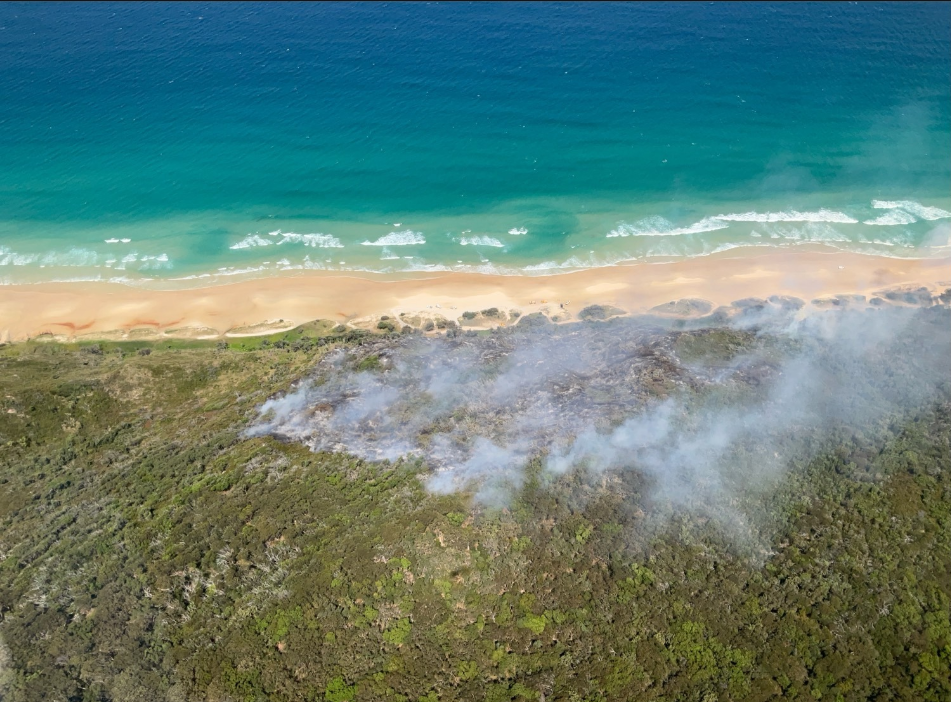
The fire was brought under control after burning seven hectares.

Eight Penalty Infringement Notices (PINs) have been issued in the wake of a blaze sparked by an illegal campfire at Teewah.

On Sunday, 26 October 2025, the illegal campfire escalated into a bushfire within the Great Sandy National Park (Cooloola section) and burned approximately seven hectares.

The fire required an emergency management response, including rangers from the Queensland Parks and Wildlife Service and support from the Rural Fire Service Queensland.

Campers were evacuated, and water-bombing aircraft and helicopters were also used to contain the fire and protect nearby camping areas.

Following an investigation, three Sunshine Coast men were fined more than $5,000 for unlawfully lighting fires, leaving fires unattended, and using plants from a Recreation Area to light a fire.

Principal Ranger Danielle Mansfield said the Cooloola Recreation area is under a permanent fire prohibition for safety and environmental reasons.

“The permanent fire prohibition was introduced in 2020 to help prevent incidents like this,” Ms Mansfield said.

“Our number one priority is the safety of rangers and visitors to our protected areas, and we also want to protect the natural and cultural values of the Cooloola Recreation area.

“Campfires are not compatible with Teewah’s coastal environment, because they can quickly escape into the dunes and bushland.

“We thank those visitors who respect other campers and the natural and cultural values by not lighting campfires at Teewah.”

QPWS rangers routinely provide education to visitors to the Cooloola Recreation Area, and fines can be issued to people who ignore the permanent fire ban.

AI innovation to revolutionise preservation of First Nations artefacts

Source: Government of Queensland

Issued: 3 Dec 2025

A Gold Coast-based business is developing a first-of-its-kind system using Artificial Intelligence (AI), to streamline processing of First Nations artefacts at the Queensland Museum.

Clevvi Technology has been selected through the Queensland Government’s Private Sector Pathways (PSP) Challenge program to bring their innovative platform to life, receiving $50,000 in government funding and $50,000 from the Queensland Museum.

Queensland-based organisations were invited to apply to the Queensland Museum Challenge by proposing an innovative solution that aims to improve the identification, cataloguing and preservation of First Nations artefacts.

Clevvi Technology’s proposed solution – an AI-assisted system, could help the Queensland Museum to digitise, classify, store and process First Nations cultural materials like hunting and gathering tools, traditional baskets, boomerangs and rock engravings.

Using AI, each artefact will be digitised by capturing high-resolution images preserving intricate details with precision, ensuring every piece of history is preserved.

Advanced algorithms then analyse the artefact to identify unique features, patterns or markings that contribute to its authenticity. These details will be securely recorded and linked to tamper-proof digital records, safeguarding their provenance and cultural significance.

AI can assist in verifying the artefact’s history by cross-referencing it with existing databases and even predicting its origin based on material composition or design.

Tags or labels will be suggested for each artefact allowing users to review and refine them and control who can access the materials in line with the Indigenous Cultural and Intellectual Property (ICIP) principles.

This innovative solution sets a benchmark for cultural institutions worldwide, celebrating and honouring the rich heritage of First Nations people.

Department of the Environment, Tourism, Science and Innovation Deputy Director-General of Innovation Jasmine Vreugdenburg said this innovative solution is a fantastic example of how technology can support scientific collections

“By leveraging AI, we can ensure these invaluable pieces of history are safeguarded,” she said.

“It’s an exciting step forward for the Queensland Museum, that also highlights Queensland businesses’ innovative capabilities.”

Clevvi Technology CEO James Deck said by combining Clevvi’s AI expertise with Anonyome Labs’ Queensland-made credential technology, we’re putting the Queensland Museum at the forefront of digital heritage preservation.

“The Clevvi team is excited to use our skills to preserve Australia’s most significant First Nations heritage,” he said.

“Our AI analyses artefacts in detail, but every suggestion is reviewed by curators and cultural knowledge holders. That combination of technology and human oversight ensures trusted provenance is preserved in digital records.

“This new system will enable experts to focus on engaging with communities and preserving cultural stories.”

Queensland Museum CEO Dr Jim Thompson said Queensland Museum is committed to preserving and honouring the cultural heritage of First Nations Peoples.

“This partnership with Clevvi Technology represents a groundbreaking step forward in how we care for and share and repatriate these invaluable artefacts,” Dr Thompson said.

“By combining cutting-edge AI with the wisdom of cultural knowledge holders, we’re ensuring these stories and histories are safeguarded for future generations while setting a global benchmark in cultural identification and preservation.”

A prototype system will be developed over the next eight months.

ACT passes new laws to tackle illicit tobacco and vapes

Source: Australian Capital Territory – State Government


ACT passes new laws to tackle illicit tobacco and vapes – Chief Minister, Treasury and Economic Development Directorate


As part of ACT Government’s ‘One Government, One Voice’ program, we are transitioning this website across to our . You can access everything you need through this website while it’s happening.


Released 03/12/2025 – Joint media release

The ACT Legislative Assembly has today passed new laws to explicitly prohibit the sale of illicit tobacco and give authorised officers stronger powers to inspect tobacco retailers’ premises, issue fines and seize prohibited items.

The Tobacco and Other Smoking Products Amendment Bill 2025 addresses growing public health risks from illegal tobacco and e-cigarettes by strengthening ACT’s regulatory framework.

Key changes under the new laws include:

  • Illicit tobacco classified as a prohibited smoking product, enabling specific regulatory actions under ACT law.
  • Expanded powers for authorised officers, including entry to public premises for inspection.
  • Strengthened seizure provisions, allowing the ACT Government to retain seized goods without compensation under defined conditions.
  • Infringement notices of $1,600 for selling prohibited smoking products, including illicit tobacco and vapes.
  • Updated identity card requirements to better protect authorised officers from occupational violence.

These changes build on earlier reforms passed in April 2025 that align ACT vaping laws with Commonwealth legislation.

The ACT Government continues to work closely with the Commonwealth and other jurisdictions to ensure a nationally coordinated approach to the illicit tobacco and e-cigarette trade.

Alongside stronger regulation, the ACT Government is investing more than $1.2 million in expanded smoking and vaping cessation support services over the next three years, including the upgraded ACT Quitline service which launched in July 2025 with new digital support options, and a pilot youth-targeted clinical vaping cessation support service set to open before the end of 2026.

For information about where to get help to quit smoking or vaping, call the Quitline on 13 QUIT (13 7848).

Quotes attributable to Minister for Health Rachel Stephen-Smith:

“These reforms are an important step in protecting our community from the harms of smoking and vaping.

“The legislation lays the foundation for stronger action. Next year, we will bring forward additional reforms to tackle the illicit tobacco trade and strengthen community protection.

“These changes form part of our long-term commitment to reducing smoking and vaping rates and creating a healthier future for all Canberrans.”

Quotes attributable to Minister for City and Government Services Tara Cheyne:

“These laws send a clear message – illicit tobacco and vaping products have no place in our community. We are committed to protecting Canberrans from harmful and illegal products.

“The illicit tobacco and vaping market is constantly evolving and so must our response. These reforms ensure the ACT remains ahead of the curve in tackling these challenges.

“Our authorised officers will now have more tools to act quickly and decisively against businesses breaking the law. This is about keeping harmful products off shelves and out of homes.

“Access Canberra has written to all tobacco licence holders across the ACT alerting them to these reforms and will actively monitor compliance with the legislation.”

– Statement ends –

Rachel Stephen-Smith, MLA | Tara Cheyne, MLA | Media Releases

«ACT Government Media Releases | «Minister Media Releases

Recognition for long-term support for the Open Employment Scheme

Source: Australian Ministers for Education

CDPP Sydney office official opening
sophie.barker@…

Date

On Tuesday, 21 October 2025, the Hon. Michelle Rowland MP, Attorney-General, opened the CDPP’s Sydney Office.

The Attorney toured the office and met with staff.

The formal opening was attended by members of the NSW Judiciary, including the Chief Justice of the NSW Supreme Court, the Chief Judge of the NSW District Court, and the Honourable Justice McNaughton, the Solicitor-General for the Commonwealth, the NSW Director of Public Prosecutions, the heads of various of our partner agencies, or their representatives, and the President of the NSW Bar, and other members of the Bar who prosecute regularly for the CDPP.

The Attorney spoke highly of the importance of our work, saying “The public’s confidence in the justice system depends heavily on the integrity of our prosecutors, the ethical conduct, transparency and accountability reinforced legitimacy of our legal institutions. Prosecutors play an indispensable role in maintaining social order and promoting democratic values.” 

The Attorney complemented the work of the CDPP, saying: “The offences you prosecute are some of the most serious and complex in the country. As an office, I commend you for rising to every new challenge seamlessly.”

The Chief Justice remarked on the number of CDPP alumni who are now members of the NSW Judiciary and emphasised the importance of the work of the CDPP to support and ensure the efficient and effective functioning of the Court.

The Director said she was proud of the new office, which is a wonderful working environment for our Sydney staff. The office boasts modern and open working space with great options for meeting and collaboration, a moot court room for developing the advocacy skills, and facilities for vulnerable witnesses to give evidence and meet with our witness assistance service. 


CLEVE RD/CLIFF RD , SOLOMON (Grass Fire)

Source: South Australia County Fire Service

SOLOMON

Issued on
03 Dec 2025 14:43

SOLOMON Grass Fire

The CFS is responding to crop and scrub fire near Red Cliff Road and Cleve Road, approximately 4 kilometers south of Kimba township, Eastern Eyre Peninsula, South Australia.

CFS volunteers on 3 trucks, supported by 6 Farm Fire Units and aircraft are on scene working to extinguish the fire, reducing the spread to adjacent properties. Firefighters will remain on scene until the area is deemed safe and will continue to monitor with the heightened fire weather predicted over the coming days.

The fire is currently burning in crop and scrub, the cause of the fire is yet to be determined.

Smoke may be visible from the township of Kimba.

Emergency services may be working on and around roads in the area, and motorists are advised to stay away. If you need to travel on roads in the area, please take care and drive to the local conditions.

Message ID 0008751